The Role of AI Tutors in Reducing Educational Inequality School Essay for Grade 8 9 10 12
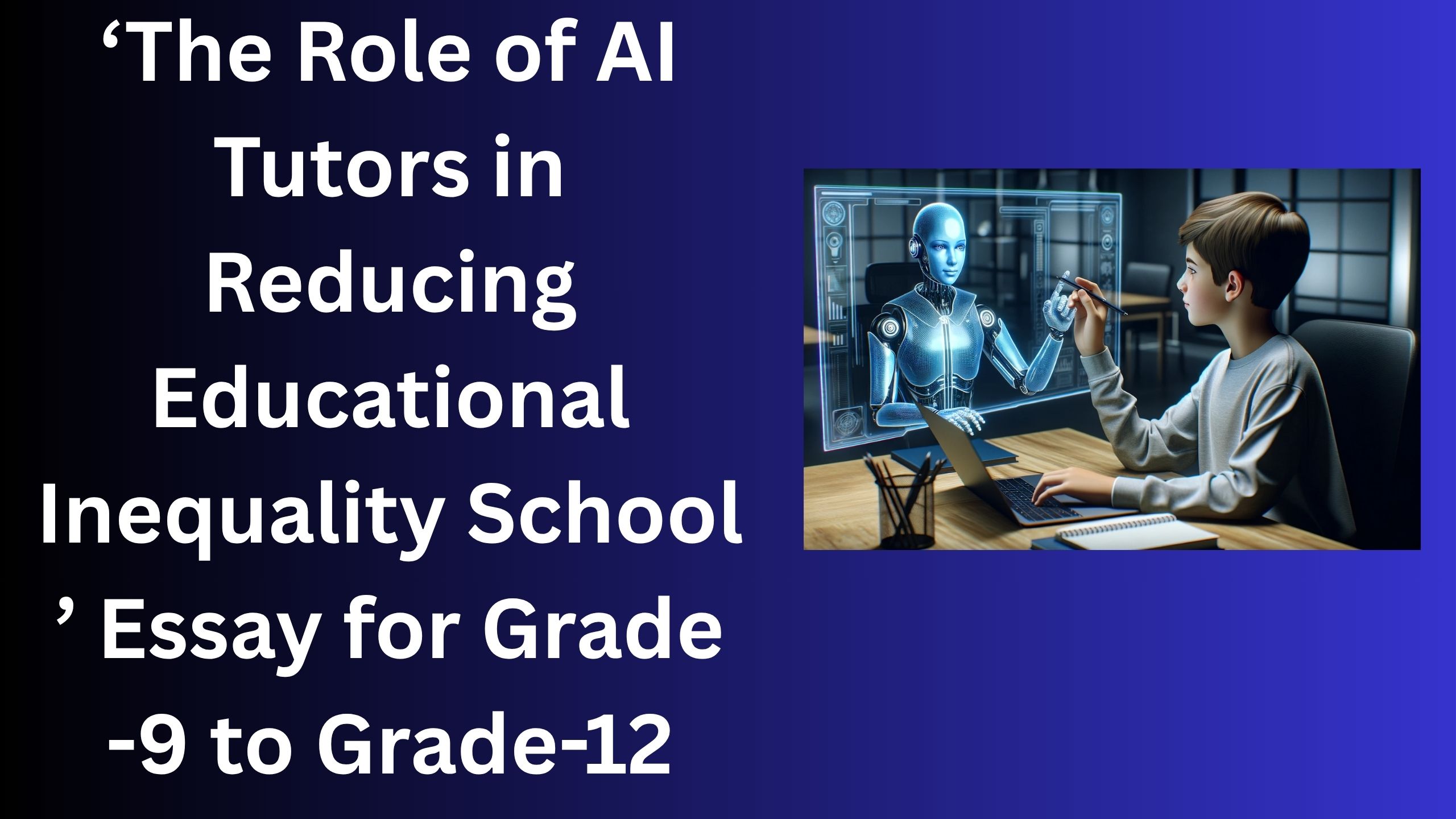
Artificial intelligence has entered classrooms around the world, and one of its most promising applications is the development of AI-powered tutoring systems. These systems offer personalized learning experiences, adapting to each student’s pace, style, and strengths. They hold particular promise for addressing educational inequality.
Traditional classrooms often struggle with overcrowding and limited teaching time. Students who fall behind may not receive the individual attention they need. AI tutors help bridge that gap by providing on-demand explanations, step-by-step guidance, and additional practice tailored to a student’s unique challenges.
Low-income communities stand to benefit the most. Many families cannot afford private tutoring, but AI-driven platforms can offer similar support at a fraction of the price—or even free. This democratization of learning support ensures that success is not limited by geography or economic background.
Still, AI is not without limitations. It cannot replace the emotional intelligence or mentorship of a human teacher. The ideal environment integrates both: human educators supported by AI tools that handle repetitive tasks, diagnose learning gaps, and offer personalized instruction.
If properly implemented, AI tutoring has the potential to narrow achievement gaps and create more equitable educational outcomes across diverse populations.
বন্ধুরা তোমারা আমাদের Whatsapp গ্রুপে অবশ্যই যুক্ত হয়ে যাবে , Whatsapp গ্রুপে যুক্ত হওয়ার জন্য ডান দিকের "Join WhatsApp Group" ক্লিক করতে হবে। এই গ্রুপে আমরা নিয়মিত প্রশ্ন উত্তর দিতে থাকব।