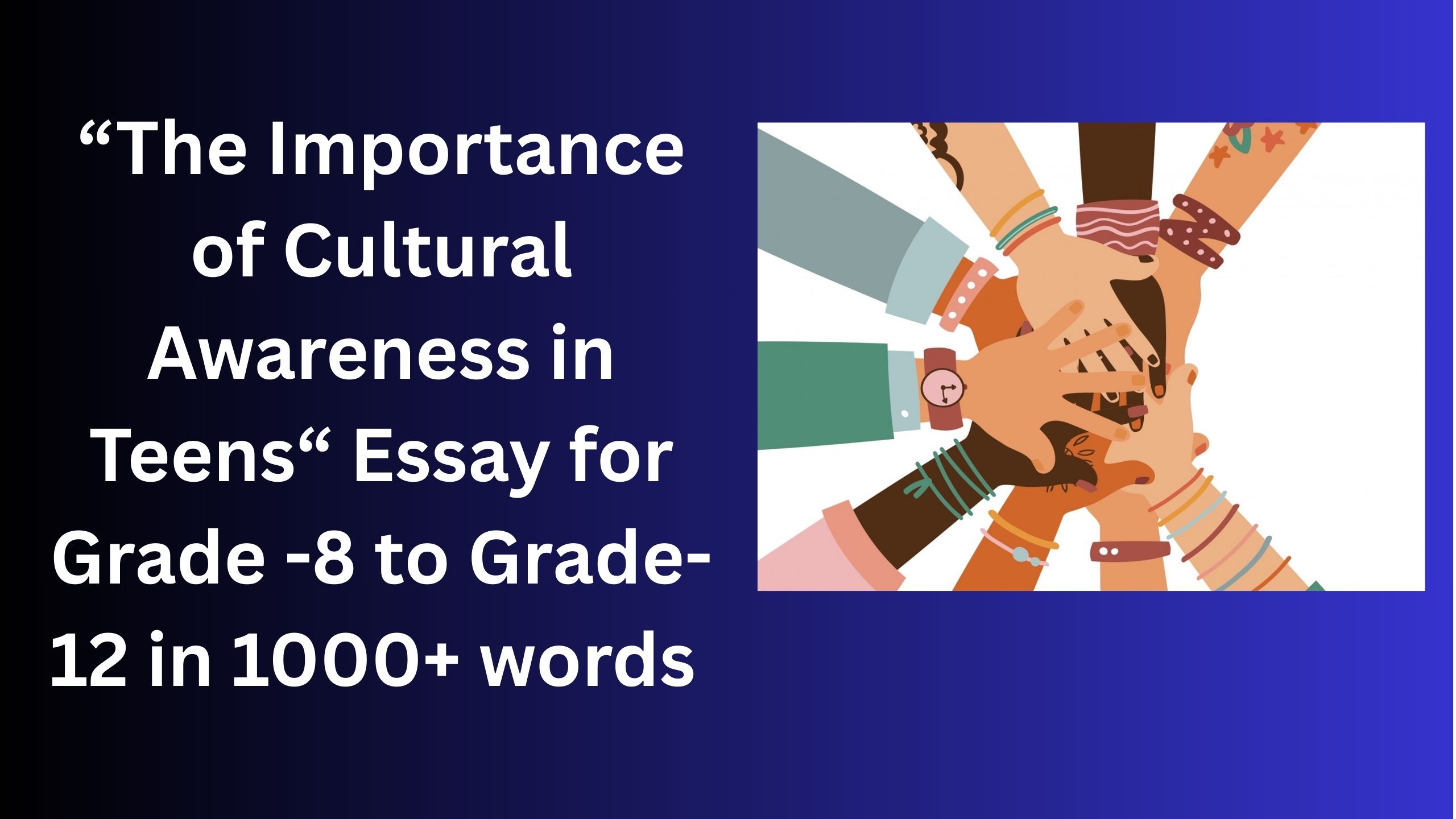
The Importance of Cultural Awareness in Teens – Essay for Grade 12 Students in Simple English | The Importance of Cultural Awareness in Teens– Essay for class 12 Students in Simple English
The Importance of Cultural Awareness in Teens – Essay in 1000+ words in Simple English
Cultural awareness means understanding, respecting, and appreciating different cultures, traditions, beliefs, and ways of life. In today’s connected world, teens meet people from many backgrounds through school, the internet, travel, and media. Because of this, cultural awareness is becoming an important life skill, not just a social idea. For teenagers, learning cultural awareness helps build respect, kindness, and open thinking. It also prepares them for future education, careers, and relationships. When teens understand that people may think, speak, dress, or live differently, they learn that these differences are normal and valuable. Cultural awareness teaches teens to look beyond stereotypes and see people as individuals. This skill helps reduce misunderstandings and conflict. It also builds confidence in social situations. As teens grow into adults, cultural awareness helps them become responsible global citizens. In a diverse society, this awareness supports peace, cooperation, and shared growth. That is why cultural awareness is very important during the teenage years, when habits, values, and attitudes are still forming.
How Cultural Awareness Shapes Teen Thinking and Behavior
Teen years are a time of learning, questioning, and self-discovery. Cultural awareness plays a strong role in shaping how teens think and behave. When teens learn about different cultures, they become more curious and less judgmental. They start asking questions instead of making quick opinions. This helps them develop critical thinking skills. Cultural awareness also improves empathy. Teens learn to understand how others feel and why they act in certain ways. This emotional understanding supports healthy friendships and teamwork. In schools, culturally aware teens are more respectful toward classmates from different backgrounds. They are less likely to bully or exclude others. Cultural awareness also helps teens communicate better. They learn that words, gestures, or behaviors can have different meanings in different cultures. This knowledge prevents misunderstandings. As teens grow, they face global issues through news and social media. Cultural awareness helps them understand these issues more clearly. It teaches them that problems and solutions can look different in different parts of the world. These thinking skills are also connected to future-ready abilities discussed in resources like /life-skills-for-students and /global-citizenship, where understanding diversity is highlighted as a key skill.
Benefits of Cultural Awareness for Education and Future Careers
Cultural awareness offers many benefits for education and future careers. In classrooms, students with cultural awareness work better in group projects. They listen to different opinions and respect different ideas. This creates a positive learning environment. Teachers often notice that culturally aware students show better cooperation and leadership. In higher education, students meet peers from many regions and countries. Cultural awareness helps them adjust easily and feel comfortable in diverse settings. In future careers, cultural awareness is a valuable professional skill. Many workplaces today are multicultural. Companies work with international clients and global teams. Employers prefer people who can communicate respectfully and adapt to different cultural situations. Cultural awareness improves teamwork, problem-solving, and customer relations. It also supports leadership because good leaders understand and respect different perspectives. For teens who dream of careers in business, healthcare, education, technology, or media, cultural awareness is a strong advantage. It helps them avoid cultural mistakes and build trust. As remote work and global collaboration increase, this skill becomes even more important. Learning cultural awareness early gives teens a strong foundation for success in a competitive world.
The Role of Schools, Families, and Media in Building Cultural Awareness
Schools, families, and media all play an important role in building cultural awareness in teens. Schools can teach cultural awareness through subjects like history, geography, and literature. Group activities, cultural programs, and discussions help students learn from each other. Teachers can encourage respect by creating inclusive classrooms. Families also influence cultural awareness at home. Parents can teach teens to respect differences through conversations, traditions, and shared experiences. Simple actions like celebrating different festivals or learning about other cultures can make a big impact. Media also shapes teen understanding of culture. Movies, books, social media, and news introduce teens to different lifestyles and beliefs. When used wisely, media can promote understanding and reduce stereotypes. However, teens should also learn to think critically about what they see online. Cultural awareness grows when teens ask questions and seek reliable information. Communities and online learning platforms such as /student-awareness and /youth-development also support cultural learning. When schools, families, and media work together, teens gain a balanced and respectful view of the world around them.
Conclusion
Cultural awareness is an important skill that helps teens grow into respectful, confident, and responsible adults. It shapes how they think, learn, and interact with others. In education, cultural awareness supports teamwork and understanding. In future careers, it improves communication and leadership. In society, it promotes peace and cooperation. Teens who develop cultural awareness are better prepared for a diverse and connected world. They learn that differences are not problems but strengths. By learning cultural awareness early, teens build a strong foundation for personal growth and global success. This is why cultural awareness is not just useful, it is essential for teens in modern life.
FAQs
What is cultural awareness in simple words?
Cultural awareness means understanding and respecting people who have different cultures, traditions, or beliefs.
Why is cultural awareness important for teens?
It helps teens make friends, avoid misunderstandings, and become kind and open-minded people.
How can teens learn cultural awareness?
Teens can learn it through school lessons, reading books, watching educational content, and talking to people from different backgrounds.
Does cultural awareness help in future jobs?
Yes, many jobs need people who can work with different cultures and communicate respectfully.
Can cultural awareness reduce conflict?
Yes, understanding differences helps reduce arguments and builds peaceful relationships.
Conclusion
Cultural awareness is an important skill that helps teens grow into respectful, confident, and responsible adults. It shapes how they think, learn, and interact with others. In education, cultural awareness supports teamwork and understanding. In future careers, it improves communication and leadership. In society, it promotes peace and cooperation. Teens who develop cultural awareness are better prepared for a diverse and connected world. They learn that differences are not problems but strengths. By learning cultural awareness early, teens build a strong foundation for personal growth and global success. This is why cultural awareness is not just useful, it is essential for teens in modern life.
বন্ধুরা তোমারা আমাদের Whatsapp গ্রুপে অবশ্যই যুক্ত হয়ে যাবে , Whatsapp গ্রুপে যুক্ত হওয়ার জন্য ডান দিকের "Join WhatsApp Group" ক্লিক করতে হবে। এই গ্রুপে আমরা নিয়মিত প্রশ্ন উত্তর দিতে থাকব।