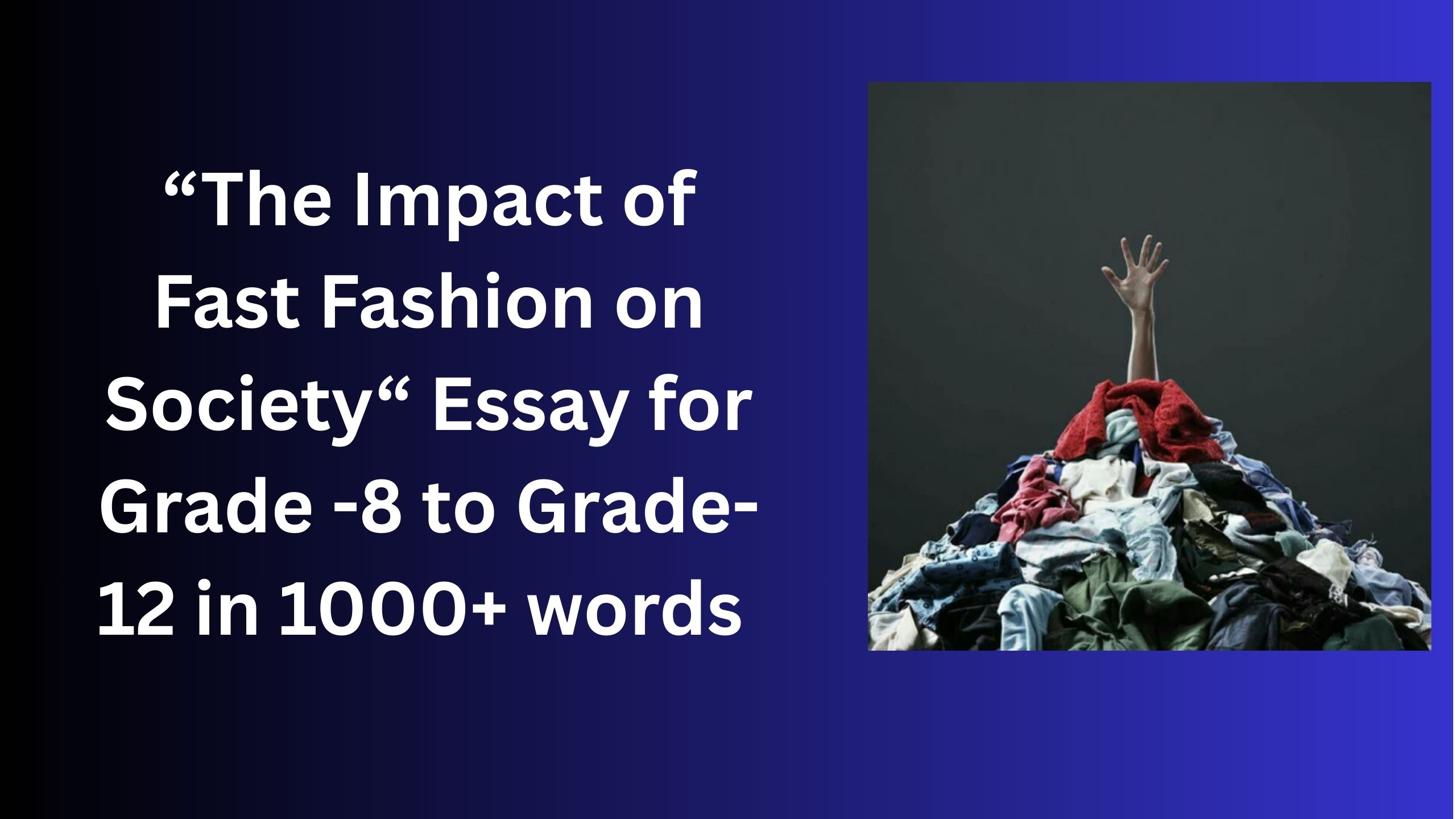
The Impact of Fast Fashion on Society– Essay for Grade 12 Students in Simple English | The Impact of Fast Fashion on Society– Essay for class 12 Students in Simple English
The Impact of Fast Fashion on Society – Essay in 1000+ words in Simple English
The Impact of Fast Fashion on Society – Essay :- Fast fashion has become a powerful force in modern life. Clothes are now cheaper, trendier, and available faster than ever before. Many people enjoy buying new outfits often because fashion brands release new styles every few weeks. This rapid system has changed how society views clothing, shopping, and personal identity. While fast fashion makes trendy clothes affordable, it also creates serious social, economic, and environmental problems. Understanding the impact of fast fashion on society is important, especially for students who are shaping future consumer habits.
Fashion was once seasonal and long-lasting. People bought fewer clothes and used them for years. Today, fast fashion encourages frequent buying and quick disposal. This change affects workers, communities, the environment, and even mental health. The impact of fast fashion is not only about clothes. It reflects deeper issues in modern society such as overconsumption, inequality, and lack of awareness.
What Is Fast Fashion and Why Is It So Popular
Fast fashion refers to the rapid production of low-cost clothing that follows the latest trends. Brands design, manufacture, and sell clothes at high speed. New collections appear weekly or monthly. This model allows customers to buy stylish clothes at very low prices. Social media plays a big role in promoting fast fashion. Influencers and advertisements create pressure to follow trends and wear new outfits often.
One reason fast fashion is popular is affordability. Students and young adults can buy fashionable clothes without spending much money. Fast fashion brands also make shopping exciting by offering constant variety. This creates a habit of impulse buying. Many consumers feel happiness when buying new clothes, even if they do not need them.
Fast fashion also connects clothing with social status. Wearing trendy outfits helps people feel confident and accepted. However, this creates a cycle where people feel outdated quickly. Clothes lose value after a few wears. This mindset encourages waste and reduces appreciation for quality. Articles on consumer behavior and modern lifestyle trends available on internal learning platforms explain how marketing influences buying decisions.
Social and Economic Impact of Fast Fashion
The social impact of fast fashion is deeply connected to labor conditions. Most fast fashion clothes are produced in developing countries. Workers in these factories often receive very low wages. They work long hours in unsafe environments. Many workers are women who have limited job options. Fast fashion companies reduce costs by outsourcing labor, which increases profit but harms workers’ well-being.
Child labor is another serious issue. In some regions, children work in textile factories instead of attending school. This affects their education and future opportunities. Society benefits from cheap clothing, but the hidden cost is human suffering. When consumers buy fast fashion without awareness, they unknowingly support unfair labor practices.
Fast fashion also affects local economies. Small clothing businesses struggle to compete with large global brands. Traditional artisans and tailors lose customers because people prefer cheaper mass-produced clothes. This leads to loss of cultural identity and traditional skills. Communities that once relied on textile crafts face unemployment and poverty.
From an economic point of view, fast fashion promotes a throwaway culture. People spend money repeatedly on low-quality items instead of investing in durable clothing. This does not encourage financial responsibility. Students especially may develop poor spending habits. Internal guides on financial literacy and responsible consumption often highlight how fast fashion contributes to unnecessary expenses.
Environmental and Ethical Impact of Fast Fashion
The environmental impact of fast fashion is one of its most damaging effects. Clothing production uses large amounts of water, energy, and chemicals. Cotton farming requires heavy water use. Synthetic fabrics are made from fossil fuels. These processes increase pollution and climate change. Rivers near textile factories are often contaminated with toxic dyes. This harms ecosystems and local communities.
Fast fashion also creates massive waste. Millions of clothes are thrown away each year. Many end up in landfills where they take decades to decompose. Synthetic fabrics release microplastics into the soil and water. These microplastics enter the food chain and affect human health. Recycling clothing is difficult because many garments are made from mixed materials.
Ethical concerns are closely linked to environmental damage. Fast fashion companies often avoid responsibility by shifting production to countries with weak environmental laws. This allows them to operate cheaply but irresponsibly. Society faces long-term consequences such as polluted water, unhealthy living conditions, and climate risks.
Consumers are becoming more aware of these problems. Sustainable fashion movements encourage buying less and choosing better-quality clothes. Educational articles on environmental responsibility and sustainable living available through internal resources help students understand how daily choices affect the planet.
How Society Can Respond to Fast Fashion
Society plays a key role in reducing the negative impact of fast fashion. Change begins with awareness. When people understand how fast fashion affects workers and the environment, they can make better choices. Education systems can include topics like sustainable fashion and ethical consumption. This helps students develop responsible habits early.
Consumers can choose quality over quantity. Buying fewer clothes and wearing them longer reduces waste. Thrift shopping and clothing swaps are simple ways to reduce demand for fast fashion. Supporting ethical brands encourages companies to improve their practices. Repairing clothes instead of discarding them also helps change consumption patterns.
Governments and organizations have responsibilities too. Strong labor laws can protect factory workers. Environmental regulations can reduce pollution. Transparency in supply chains allows consumers to see how clothes are made. Technology can also support sustainable fashion by improving recycling and reducing waste.
Social media can be used positively. Influencers can promote slow fashion and responsible shopping. When trends focus on sustainability rather than constant newness, social values shift. Internal content on sustainability education and youth awareness programs shows how collective effort can bring positive change.
Conclusion
Fast fashion has a strong impact on society, both positive and negative. It makes clothing affordable and trendy, but it also creates serious problems for workers, the environment, and consumer behavior. Low wages, unsafe working conditions, pollution, and massive clothing waste are hidden costs that society often ignores. The fast fashion industry encourages people to buy more than they need and value quantity over quality.
To reduce the harmful effects of fast fashion, society must become more aware and responsible. Students, consumers, brands, and governments all have a role to play. Choosing sustainable fashion, supporting ethical brands, and changing shopping habits can create a positive difference. When people understand the true impact of fast fashion on society, they can make better choices for the future. A shift toward conscious consumption can protect both human dignity and the environment, leading to a more balanced and responsible fashion culture.
FAQ
What is fast fashion in simple words?
Fast fashion means making cheap clothes quickly to match new trends and selling them at low prices.
Why is fast fashion bad for society?
Fast fashion harms workers, pollutes the environment, and encourages wasteful habits in society.
Does fast fashion affect students?
Yes, it affects students by promoting overbuying, poor spending habits, and lack of awareness about ethical issues.
Can fast fashion ever be sustainable?
Fast fashion can improve, but true sustainability requires slower production and responsible consumption.
How can students help reduce fast fashion impact?
Students can buy fewer clothes, reuse items, choose ethical brands, and spread awareness among friends.
বন্ধুরা তোমারা আমাদের Whatsapp গ্রুপে অবশ্যই যুক্ত হয়ে যাবে , Whatsapp গ্রুপে যুক্ত হওয়ার জন্য ডান দিকের "Join WhatsApp Group" ক্লিক করতে হবে। এই গ্রুপে আমরা নিয়মিত প্রশ্ন উত্তর দিতে থাকব।