Can You Explain the Difference Between Endothermic and Exothermic Reactions in Simple Terms?
Can You Explain the Difference Between Endothermic and Exothermic Reactions in Simple Terms?
Many students find chemical reactions confusing at first. Words like endothermic and exothermic sound complex. But the idea behind them is simple. These terms describe how energy moves during a chemical reaction. In basic chemistry, understanding the difference between endothermic and exothermic reactions helps students understand heat changes, energy flow, and real-life examples in science. This article explains everything in clear and simple language for better learning.
What Is a Chemical Reaction and Why Energy Matters
Before understanding endothermic and exothermic reactions, we must understand what a chemical reaction is. A chemical reaction happens when substances change into new substances. During this process, energy is either absorbed or released.
Energy plays a key role in every chemical reaction. It can appear as heat, light, or sound. Most reactions involve heat energy. That is why we often talk about temperature changes when learning about these reactions.
If a reaction makes its surroundings warmer, it releases heat. If a reaction makes its surroundings cooler, it absorbs heat. This simple idea forms the base of understanding endothermic and exothermic reactions in chemistry.
Energy changes are measured in terms of heat. Scientists study these changes to understand how reactions work. This topic is important in school exams and practical experiments.
If you want to understand basic chemistry concepts, you can also explore our guide on types of chemical reactions at /types-of-chemical-reactions.
What Is an Endothermic Reaction in Simple Words
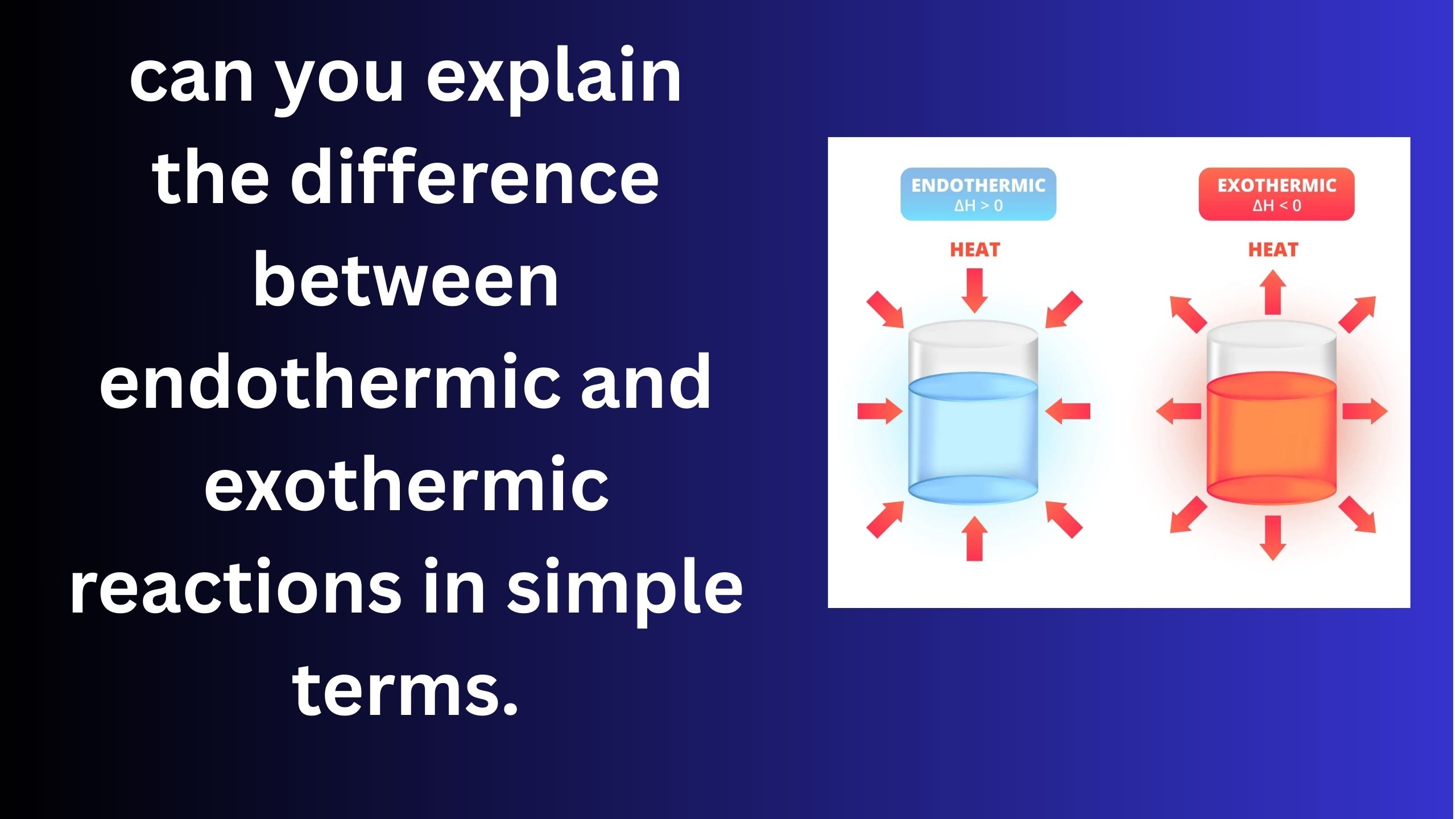
An endothermic reaction is a chemical reaction that absorbs heat from its surroundings. The word “endo” means inside, and “thermic” relates to heat. So, endothermic means heat goes inside the reaction.
In simple terms, the reaction takes in energy. Because it absorbs heat, the surroundings feel cooler. If you touch the container, it may feel cold.
A common example of an endothermic reaction is photosynthesis. Plants absorb sunlight energy to make food. The energy is stored inside the chemical bonds of glucose. Another simple example is when ammonium nitrate dissolves in water. The solution becomes cold because heat is absorbed.
Endothermic reactions need energy to continue. Without energy supply, they may stop. These reactions store energy in the products.
Students often remember endothermic reactions by thinking, “Energy enters.” This small memory trick helps in exams.
What Is an Exothermic Reaction in Simple Words
An exothermic reaction is a chemical reaction that releases heat into the surroundings. The word “exo” means outside. So, exothermic means heat goes outside.
In simple terms, the reaction gives out energy. Because it releases heat, the surroundings feel warmer. If you touch the container, it may feel hot.
A common example of an exothermic reaction is burning fuel. When wood burns, it releases heat and light. Another example is respiration in the human body. When we break down food, energy is released to keep us warm and active.
Explosion reactions are also exothermic because they release a large amount of energy quickly.
Students can remember exothermic reactions by thinking, “Energy exits.” This makes the concept easy and clear.
Exothermic reactions are important in daily life. Cooking, heating systems, and engines all use exothermic processes.
Key Differences Between Endothermic and Exothermic Reactions
The main difference between endothermic and exothermic reactions is the direction of heat flow. In endothermic reactions, heat is absorbed. In exothermic reactions, heat is released.
Another difference is temperature change. Endothermic reactions make surroundings cooler. Exothermic reactions make surroundings warmer.
Energy storage also differs. Endothermic reactions store energy in the products. Exothermic reactions release energy to the surroundings.
Let us look at a simple comparison in words. Endothermic reactions need energy to continue. Exothermic reactions produce energy as they happen.
Understanding this difference helps students solve chemistry problems easily. It also helps in experiments where temperature change is observed.
In energy diagrams, endothermic reactions show products with higher energy than reactants. Exothermic reactions show products with lower energy than reactants.
If you want to learn more about energy changes in chemistry, you can check our lesson on energy changes in reactions at /energy-changes-in-chemistry.
Why Understanding Endothermic and Exothermic Reactions Is Important
Learning the difference between endothermic and exothermic reactions is important for exams and practical knowledge. These concepts appear in school science and higher-level chemistry.
They also help students understand real-life processes. For example, cold packs used in sports injuries work through endothermic reactions. They absorb heat and reduce swelling. Hot packs use exothermic reactions to release heat.
Understanding energy flow also helps in industries. Many manufacturing processes depend on heat control. Chemical plants must manage energy changes carefully for safety.
In environmental science, energy changes help explain global warming and fuel usage. Combustion reactions release energy and carbon dioxide.
For students, this topic builds a strong foundation in thermochemistry. It improves scientific thinking and problem-solving skills.
Simple understanding leads to strong learning. Instead of memorizing definitions, students should focus on the idea of energy entering or exiting.
Conclusion
The difference between endothermic and exothermic reactions is simple when explained clearly. Endothermic reactions absorb heat. Exothermic reactions release heat. One makes surroundings cooler, and the other makes them warmer. These concepts are important in chemistry, daily life, and scientific understanding. When students focus on the direction of energy flow, the topic becomes easy and interesting.
FAQs
Q1. What is the easiest way to remember endothermic and exothermic reactions?
Remember that endothermic means energy enters, and exothermic means energy exits.
Q2. Which reaction feels cold to touch?
Endothermic reactions feel cold because they absorb heat from surroundings.
Q3. Which reaction releases heat?
Exothermic reactions release heat and make surroundings warmer.
Q4. Is burning wood endothermic or exothermic?
Burning wood is an exothermic reaction because it releases heat and light.
Q5. Why do plants use an endothermic reaction?
Plants absorb sunlight energy during photosynthesis, which makes it an endothermic process.
বন্ধুরা তোমারা আমাদের Whatsapp গ্রুপে অবশ্যই যুক্ত হয়ে যাবে , Whatsapp গ্রুপে যুক্ত হওয়ার জন্য ডান দিকের "Join WhatsApp Group" ক্লিক করতে হবে। এই গ্রুপে আমরা নিয়মিত প্রশ্ন উত্তর দিতে থাকব।