A World Where Kids Make the Rules– Essay for Students in Simple English | A World Where Kids Make the Rules– Essay for Students in Simple English
A World Where Kids Make the Rules– Essay in 15 lines in Simple English
- Imagine a world where kids make all the rules.
- This world would be full of creativity and fun.
- Schools would focus on learning with joy, not pressure.
- Homework would be meaningful and not stressful.
- Play, art, and sports would be equally important.
- Rules would be based on kindness and fairness.
- Bullying and teasing would not be allowed.
- Everyone would be treated with respect.
- Kids would care deeply about nature and animals.
- Parks and playgrounds would be safe and colorful.
- Mistakes would be treated as learning opportunities.
- Children would learn responsibility by making decisions.
- There would be challenges in handling serious problems.
- Adults would guide but not control children.
- A world where kids make the rules would teach leadership and empathy.
A World Where Kids Make the Rules – Essay in 500+ words in Simple English
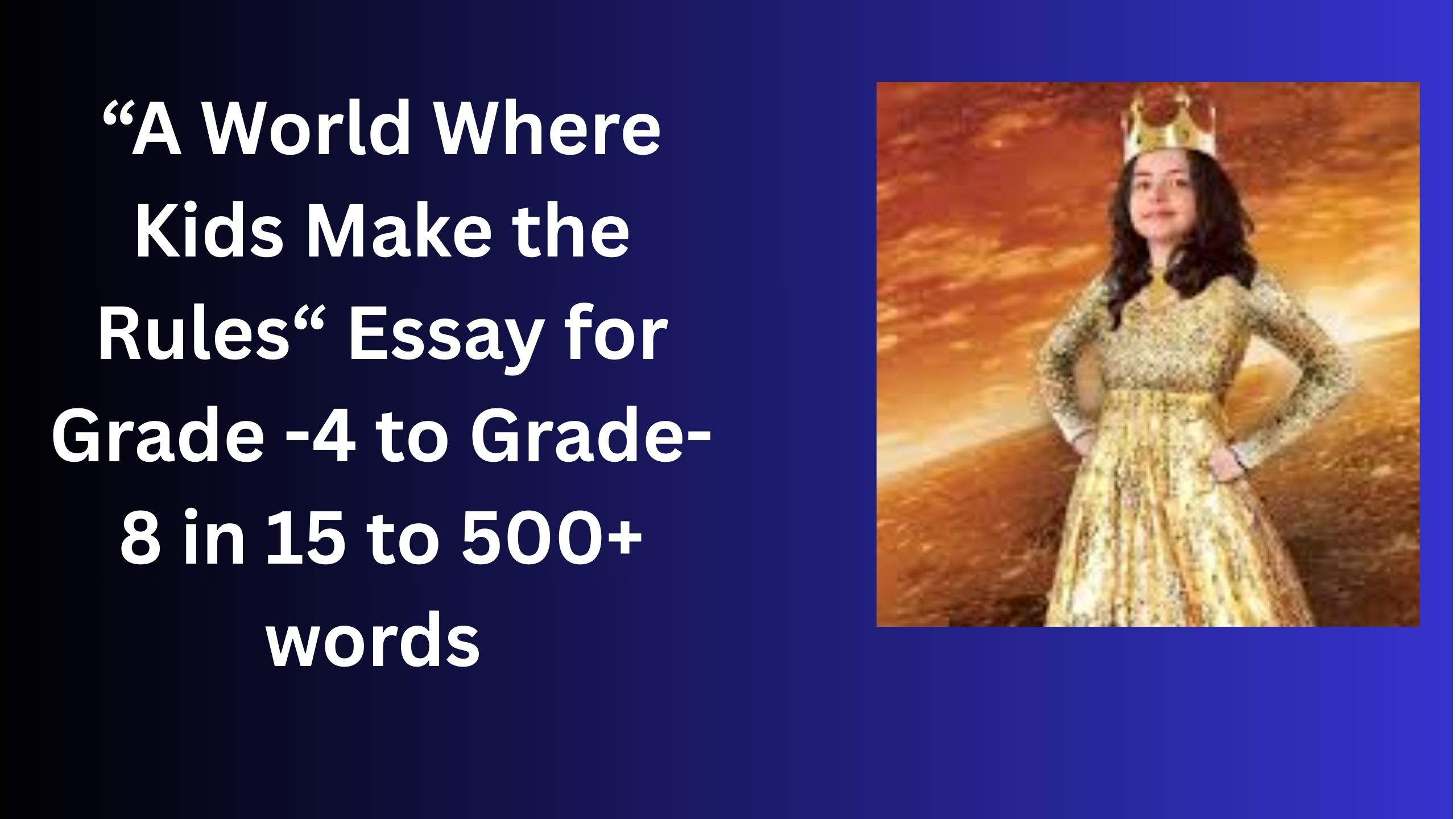
A World Where Kids Make the Rules – Essay:- Imagine a world where kids make the rules. In this world, children have the power to decide how schools run, how cities are designed, and how people treat each other. This idea sounds fun and exciting, but it also makes us think deeply about responsibility and fairness. A world where kids make the rules would be very different from the adult-controlled world we live in today. It would reflect creativity, honesty, and imagination, but it would also face challenges. Thinking about such a world helps students understand leadership, decision-making, and social values.
Kids often see the world with fresh eyes. They notice things adults ignore. If children were in charge, rules would focus more on happiness, freedom, and fairness. At the same time, kids would have to learn how rules affect everyone. This imaginary world teaches important lessons about balance and responsibility.
How Schools and Daily Life Would Change
In a world where kids make the rules, schools would be more enjoyable and less stressful. Learning would focus on curiosity rather than pressure. Homework would be meaningful, not excessive. Subjects like art, sports, and life skills would receive equal importance as math and science. Teachers would act as guides instead of strict authority figures. Internal learning resources on student-centered education explain how fun learning improves understanding.
Daily life would also change. Kids would design playgrounds, parks, and public spaces. These places would be colorful, safe, and welcoming. Timetables would include time for rest and creativity. Rules would allow children to express themselves freely. This world would value play as much as work, helping everyone feel balanced and happy.
Technology would be used wisely. Screen time rules would be fair, not extreme. Kids understand both fun and boredom, so they would try to keep balance. This shows that children are capable of thoughtful decisions when given trust.
Rules Based on Kindness and Fairness
One of the biggest changes in a kid-ruled world would be kindness. Kids often believe in fairness and honesty. Rules would focus on sharing, helping others, and stopping bullying. There would be strict rules against teasing, discrimination, and violence. Everyone would feel safe and respected.
Punishments would be replaced by learning. Instead of harsh penalties, kids would focus on understanding mistakes and fixing them. This approach would encourage personal growth. Internal articles on moral education and empathy show how kindness-based rules build stronger communities.
Kids would also care about animals and nature. Environmental rules would protect trees, animals, and clean water. Littering would be banned, and recycling would be encouraged. This world would be cleaner and greener because children often care deeply about the planet’s future.
Challenges in a World Run by Kids
Even though this world sounds wonderful, it would not be perfect. Kids may struggle with complex problems like economics, healthcare, and international relations. Making rules requires experience and long-term thinking. Sometimes emotions could influence decisions more than logic.
Kids might disagree with each other. Arguments could arise about rules and fairness. Learning to compromise would be important. Adults would still play a supportive role by guiding children without controlling them. Internal guidance on leadership and teamwork explains how support helps young leaders grow.
These challenges show that leadership is not easy. A world where kids make the rules would teach children the importance of patience, planning, and responsibility. It would help them understand why rules exist and how difficult it is to satisfy everyone.
Conclusion
A world where kids make the rules would be full of imagination, fairness, and joy. It would focus on kindness, creativity, and balanced living. At the same time, it would teach children valuable lessons about leadership and responsibility. This idea reminds us that children’s voices matter. When kids are listened to and guided properly, they can help create a better and more understanding world.
Frequently Asked Questions (FAQ)
What does a world where kids make the rules mean?
It means children are responsible for making laws and decisions.
Would schools be better in this world?
Yes, learning would be more fun and student-focused.
Can kids make fair rules?
Kids value fairness, but they still need guidance and experience.
What is the biggest benefit of this world?
More kindness, creativity, and happiness.
What is the biggest challenge?
Handling serious and complex problems responsibly.
বন্ধুরা তোমারা আমাদের Whatsapp গ্রুপে অবশ্যই যুক্ত হয়ে যাবে , Whatsapp গ্রুপে যুক্ত হওয়ার জন্য ডান দিকের "Join WhatsApp Group" ক্লিক করতে হবে। এই গ্রুপে আমরা নিয়মিত প্রশ্ন উত্তর দিতে থাকব।