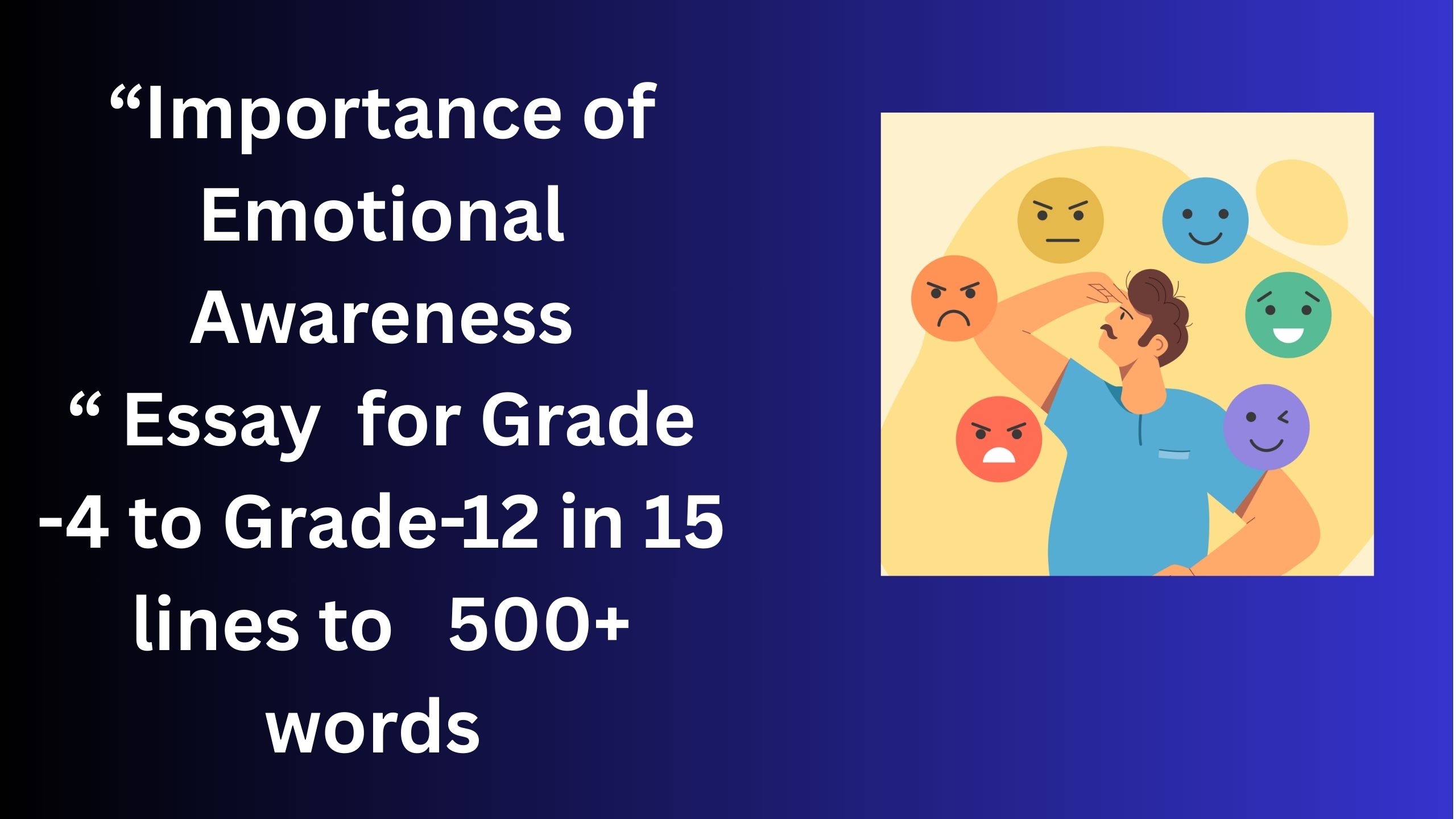
Essay on Importance of Emotional Awareness in 500+ words in Simple English
Emotional awareness means understanding your own feelings and the feelings of others. It helps students know why they feel happy, angry, stressed, or confused. Many students focus only on marks and skills, but emotions also play a big role in success. When emotions are ignored, stress increases and confidence decreases. When emotions are understood, life becomes easier to manage.
In student life, emotions change very fast. Exams, friendships, family pressure, and future goals affect the mind every day. Emotional awareness helps students stay calm and make better choices. It is not about controlling emotions. It is about understanding them and responding in a healthy way.
What Is Emotional Awareness and Why It Matters
Emotional awareness is the ability to notice, understand, and name your emotions. It also includes understanding how emotions affect thoughts and actions. When students know what they are feeling, they can handle situations better.
For example, a student who understands exam anxiety can prepare early instead of panicking at the last moment. A student who understands anger can avoid fights and focus on solutions. Emotional awareness gives clarity to the mind.
This skill is important because emotions guide behavior. If emotions are ignored, they often come out in negative ways. Stress may turn into anger. Fear may turn into avoidance. Emotional awareness stops this chain.
Students with emotional awareness communicate better. They express their feelings clearly. This improves friendships and teacher-student relationships. It also builds self-respect and confidence.
Emotional awareness is a core part of emotional intelligence. If you want to understand this topic better, you can read our detailed guide on emotional intelligence for students at /emotional-intelligence-for-students.
How Emotional Awareness Helps Students in Daily Life
Emotional awareness helps students manage stress. When students understand stress signals, they can take action early. This prevents burnout and mental exhaustion.
It also improves focus and learning. A calm and aware mind learns better. When emotions are balanced, concentration increases. This leads to better academic performance.
Emotional awareness also supports better decision-making. Students often make quick decisions based on emotions. Awareness helps them pause and think. This reduces mistakes in studies and personal life.
Another benefit is better self-control. Emotional awareness helps students respond instead of reacting. This is very useful during exams, presentations, and conflicts.
It also supports mental health. Students who understand their emotions feel less overwhelmed. They know when to ask for help. This reduces anxiety and depression.
For practical ways to manage stress, students can explore our article on stress management tips at /stress-management-for-students.
Role of Emotional Awareness in Relationships and Future Success
Healthy relationships need emotional understanding. Emotional awareness helps students understand others’ feelings. This builds empathy and trust.
In friendships, it reduces misunderstandings. In family life, it improves communication. In classrooms, it creates respect and cooperation.
Emotional awareness is also important for future careers. Employers value emotional intelligence. It helps in teamwork, leadership, and problem-solving.
Students who develop emotional awareness early adapt better to changes. They handle failure with maturity. They stay motivated during challenges.
This skill also builds resilience. When students understand emotions like disappointment and fear, they recover faster. They do not give up easily.
Emotional awareness is not a one-day skill. It grows with practice. Journaling, reflection, and open conversations help build it over time.
Conclusion
Emotional awareness is a powerful life skill for students. It improves learning, relationships, and mental health. It helps students understand themselves and others. In a world full of pressure, emotional awareness brings balance and clarity. Students who develop this skill early are better prepared for exams, careers, and life challenges.
FAQs
Q1. What does emotional awareness mean for students?
It means understanding your feelings and knowing how they affect your thoughts and actions.
Q2. Can emotional awareness improve exam performance?
Yes. It helps manage exam stress and improves focus and confidence.
Q3. Is emotional awareness the same as emotional intelligence?
No. Emotional awareness is a part of emotional intelligence, but emotional intelligence includes more skills.
Q4. How can students improve emotional awareness?
Students can reflect on their feelings, write journals, and talk openly about emotions.
Q5. Why is emotional awareness important for mental health?
It helps students understand stress and emotions early, which prevents mental health problems.
বন্ধুরা তোমারা আমাদের Whatsapp গ্রুপে অবশ্যই যুক্ত হয়ে যাবে , Whatsapp গ্রুপে যুক্ত হওয়ার জন্য ডান দিকের "Join WhatsApp Group" ক্লিক করতে হবে। এই গ্রুপে আমরা নিয়মিত প্রশ্ন উত্তর দিতে থাকব।